
HomeAccounting & Bookkeeping Solutions

KRV Auditing solutions background

Accounting & Bookkeeping
Solutions

Accounting & Bookkeeping Solutions

KRV Auditing’s Accounting & Bookkeeping solutions are designed to keep your financial records accurate and up to date, ensuring timely reporting and full regulatory compliance. We provide the support needed for effective financial management helping you focus on growing your business.

Our Accounting & BookkeepingServices Include:

Accounting & Financial Reporting

When the FTA requests your records during a Corporate Tax review, when a bank asks for monthly management accounts, when investors want a consistent quarterly pack, when the board needs numbers it can actually trust — they are all asking the same question: are your books clean, current, and ready for scrutiny? Most UAE businesses discover the answer is "no" only at the worst possible moment.

KRV's accounting and financial reporting services give UAE businesses IFRS-compliant books, disciplined monthly closes, and management reporting that holds up under FTA, auditor, and investor review — delivered by qualified accountants, not data-entry operators.

Why accounting & financial reporting matters in the UAE

Corporate Tax, VAT, UBO filings, free-zone licence renewals, bank covenants — every one of these depends on accurate, timely financial records. Disorganised accounting isn't just a finance problem; it becomes a compliance problem and a capital problem the moment anyone external asks to see the numbers.

KRV accounting & financial reporting approach

We set up your chart of accounts correctly from day one, close the books on a fixed monthly calendar, and produce IFRS-compliant financial statements that double as the starting point for your tax return and your year-end audit. A senior accountant owns your file from engagement start — not a rotating back-office team.

Accounting and financial reporting

Frequently asked question

Can KRV handle our accounting fully remotely?

Yes. We work on cloud accounting platforms like Zoho Books, QuickBooks, Xero, and Tally, which means your books are accessible in real time from anywhere. On-site work is available where it adds value — typically for inventory-heavy businesses or initial system setup.


Backlog Accounting

When Corporate Tax registration forces a look at years of unreconciled books, when a bank loan hinges on three years of clean financials, when an acquirer opens due diligence and finds a ledger that hasn't been closed in eighteen months, when the FTA issues a VAT assessment for periods your records can't defend — they all expose the same gap: backlog.

KRV's backlog accounting services bring UAE businesses current — reconstructing records, reconciling ledgers, and restating financials under IFRS so you can file, borrow, sell, or defend with confidence.

Why backlog accounting matters in the UAE

The UAE's tightening regulatory environment — Corporate Tax, VAT, UBO, e-Invoicing — doesn't give backlog a free pass. FTA penalties for unfiled and incorrectly filed returns accumulate quickly, and banks and acquirers walk away from companies that can't produce a clean financial history. Fixing backlog is cheaper than defending it.

KRV backlog accounting approach

We scope the backlog honestly — how many months, which accounts, which reconciliations — before quoting. Then we work in reverse chronological order: bank reconciliations first, then receivables and payables, then the trial balance, month by month until you're current. No shortcuts, no estimated numbers handed to your auditor.

Backlog accounting

Frequently asked question

How far back can backlog accounting realistically go?

Technically as far as your records allow, but practically we usually rebuild 2–5 years of backlog. Older periods depend entirely on what source documents survived — bank statements, invoices, contracts. We tell you upfront what's recoverable and what isn't before any work begins.

Fixed Asset Management

When your external auditor asks for a physical verification of assets, when the FTA questions depreciation claimed in your Corporate Tax return, when you're preparing for a sale and discover that half the assets on your register no longer exist, when insurance renewal asks for up-to-date values — they all reveal the same weakness: a fixed asset register that doesn't match reality.

KRV's fixed asset management services help UAE businesses build, verify, and maintain accurate fixed asset registers — complete with tagging, valuation, depreciation schedules, and the audit trail your auditor, the FTA, and your bank will expect.

Why fixed asset management matters in the UAE

Fixed assets often carry some of the largest unreconciled differences between the books and physical reality. Under UAE Corporate Tax, depreciation is deductible only where assets exist and are used in the business — so gaps in the register translate directly into disallowed deductions, amended returns, and penalties.

KRV fixed asset management approach

We build your register from source documents, physically verify each asset on-site, apply asset tags for future tracking, and set up IFRS-compliant depreciation schedules. Where gaps exist between books and physical reality, we document variances and work through impairment and write-off decisions with your finance team before the auditor sees them.

Fixed asset management

Frequently asked question

Is a fixed asset register required for UAE Corporate Tax compliance?

Effectively, yes. Depreciation is a deductible expense only where you can demonstrate that the asset exists, belongs to the business, and is used to generate taxable income. A properly maintained register is how you demonstrate all three.

Inventory Verification

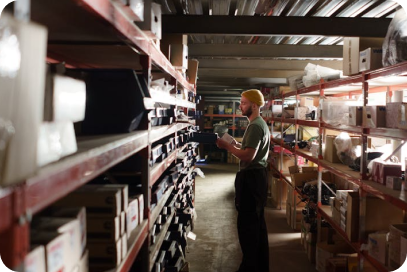
When your external auditor arrives for the year-end count, when a bank requires physical verification of pledged stock, when your gross margin numbers stop making sense, when shrinkage surfaces without explanation — they all point to the same problem: nobody actually knows what's in the warehouse.

KRV's inventory verification services give UAE trading, retail, and manufacturing businesses independent physical counts, valuation reviews, and book-to-stock reconciliations — performed by qualified teams and acceptable to auditors, banks, and insurers.

Why inventory verification matters in the UAE

Inventory is usually the largest single line on a trading company's balance sheet, and the most easily manipulated. Overstated inventory inflates profit and understates tax. Understated inventory raises questions from auditors and the FTA. Independent physical verification is the only way to close the loop and give every stakeholder confidence in the number.

KRV inventory verification approach

We plan counts around risk — which locations, which SKUs, full count versus statistical sample — and execute with experienced field teams who understand warehouse realities. Physical counts are reconciled to your books, variances are investigated to root cause, and the reporting is detailed enough for your auditor to rely on without re-performing the work.

Inventory verification

Frequently asked question

What's the difference between inventory verification and a stock audit?

In practice they overlap heavily. Inventory verification focuses on the physical count and reconciliation; stock audit typically adds valuation review and a formal certificate. We scope either based on what your recipient — auditor, bank, or insurer — actually needs.

Standard Operating Procedures (SOPs)

When a key finance employee resigns and takes your process knowledge with them, when an auditor finds that the same control is applied differently by three different people, when onboarding a new hire takes three months of trial and error, when an investor asks how your finance function scales — they all reveal the same gap: no documented SOPs.

KRV's SOP documentation services give UAE businesses clear, practical, auditor-ready process documents across finance, procurement, payroll, inventory, and compliance — built from how your team actually works, not generic templates downloaded from a shelf.

Why SOPs matter in the UAE

Under UAE Corporate Tax, AML, and UBO frameworks, regulators increasingly expect documented procedures — not just compliant outcomes. SOPs also reduce key-person risk, accelerate onboarding, and give investors and acquirers the governance proof they look for during due diligence. The companies without them find out the hard way.

KRV SOP approach

We walk through your processes with the people who actually run them, document the current state honestly, flag control gaps, and design SOPs that reflect how your business should operate — not a textbook ideal. Each SOP includes process flows, responsibilities, control points, and exception handling written in language your team will actually use.

Standard operating procedures

Frequently asked question

Do SOPs need to be updated regularly?

Yes. SOPs that haven't been reviewed in two years are usually out of sync with the business. We recommend a formal review annually, plus ad-hoc updates whenever a system, regulation, or key role changes significantly.

E-Invoicing Implementation

When the UAE's mandatory e-invoicing regime reaches your business size band, when the FTA confirms the Peppol-based framework applies to your sector, when your ERP can't produce invoices in the required structured format, when you realise VAT and Corporate Tax reporting will increasingly draw directly from e-invoice data — they all point to the same reality: e-invoicing isn't optional, and it isn't just an IT project.

KRV's e-invoicing implementation services help UAE businesses prepare for the mandatory e-invoicing regime — mapping your current invoicing flows, selecting an Accredited Service Provider, configuring your ERP, and going live without disrupting operations.

Why e-invoicing matters in the UAE

The UAE's e-invoicing mandate is being rolled out in phases, and non-compliance will carry both penalties and operational friction with customers and suppliers. More importantly, e-invoicing changes the relationship between your invoicing system, your VAT return, and your Corporate Tax position — data you submit in an e-invoice becomes tax evidence in real time.

KRV e-invoicing approach

We run a readiness assessment, map your invoicing scenarios (B2B, B2G, cross-border, free-zone, reverse charge), help you select and integrate with an FTA-Accredited Service Provider, test your data against Peppol standards, and train your finance team. We also align the e-invoicing setup with your VAT and Corporate Tax compliance so data flows cleanly across all three — not in silos that create reconciliation problems later.

E-invoicing implementation

Frequently asked question

Is e-invoicing mandatory for all UAE businesses?

It's being rolled out in phases based on business size and sector, but the direction is clear: eventually all VAT-registered businesses will be in scope. The right time to prepare is before your phase deadline, not during it.

By choosing our Accounting & Bookkeeping solutions, you’ll have accurate financial records, a streamlined accounting process, and peace of mind knowing
your business is fully compliant.

Ready to get started?

Let's work together to ensure your business meets the highest standards of audit and assurance.

For any queries contact us on WhatsApp

Chat on WhatsApp